
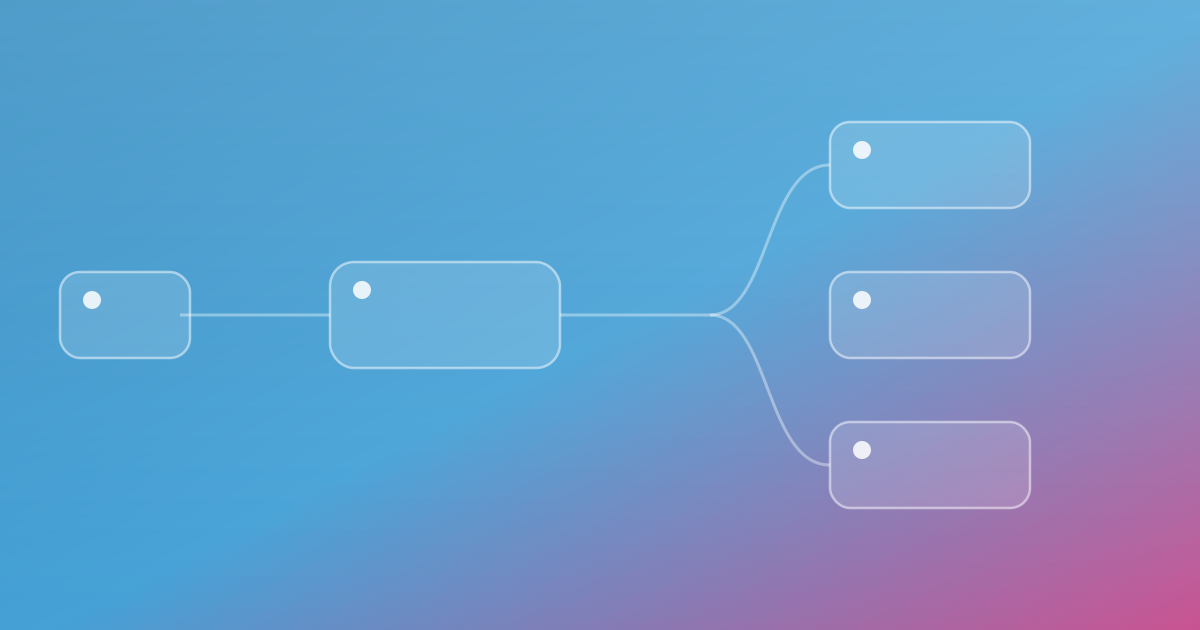
A task dependency exists when one task’s completion relies on another task’s state. The second task can’t meaningfully start, or finish, until the first one is closed out. This relationship doesn’t live on paper — it lives in the actual order work has to happen in. A task management system just makes it visible.
Dependent vs. independent tasks
A team’s tasks are rarely fully isolated from each other. Some can be done at any time, regardless of what anyone else is working on — these are independent tasks. Others only make sense to start once a precondition has already been met.
Example: product page copy can’t be translated until the final source text has been approved. The translation task here depends on the copy approval. If nobody records that relationship, the translator might start working on a version that’s outdated two days later.
A dependency, then, isn’t an organizational formality — it’s a map of how the work actually works.
Why recording dependencies matters
If a dependency only exists in people’s heads, three things tend to happen:
- someone starts a task they can’t actually finish, because a precondition is missing,
- a delay quietly spreads to downstream tasks because nobody saw the impact coming,
- the team only discovers after the fact — usually in a status meeting — that two tasks were connected, by which point it’s too late to react.
A recorded dependency flags the risk in advance instead. If the precondition slips, it’s immediately clear which tasks are affected — nobody has to remember what was said in last week’s status meeting.
When it’s worth creating a dependency between two tasks
Not every relationship is worth recording. A dependency earns its place when:
- the second task genuinely can’t be done (not just inconvenient to do) without the first,
- the two tasks belong to different owners, so the connection isn’t obvious to everyone by default,
- a delay in the precondition has a real effect on the second task’s deadline.
If a connection is only theoretical — “it’d be nice if this were done first, but it’s not a requirement” — it’s not worth recording as a dependency. Too many dependencies with no real weight behind them make a system just as hard to read as having none at all.
How this works in practice: blocking
The most concrete form a task dependency takes is when one task blocks another. This means that as long as the precondition task stays open, the downstream task automatically carries a “blocked” label. In MyPro Sync, this is set directly on a task: it can be marked as blocking another one, and the blocked task keeps that status until the obstacle is cleared.
That label isn’t just information — it points to where attention should go. If a task is blocked, its owner has nothing to do on it for now; the focus shifts to closing out the precondition. We covered this in more depth in why tasks slip even when everyone is working.
What’s the difference between sequence and dependency?
It’s worth separating two things. The fact that a team is used to working in a certain order doesn’t by itself mean a real dependency exists. If task A usually comes before task B, but B is technically doable without A — just less convenient — that’s not blocking, it’s just a habitual way of working.
A real dependency starts where the second task’s outcome would be wrong or meaningless without the first. That distinction helps decide when something actually needs to be recorded, and when a team’s own routine is enough to rely on.
If a team keeps noticing that tasks slip because they were waiting on another task — without that ever showing up anywhere in advance — that’s a sign the dependencies were never recorded, only assumed.